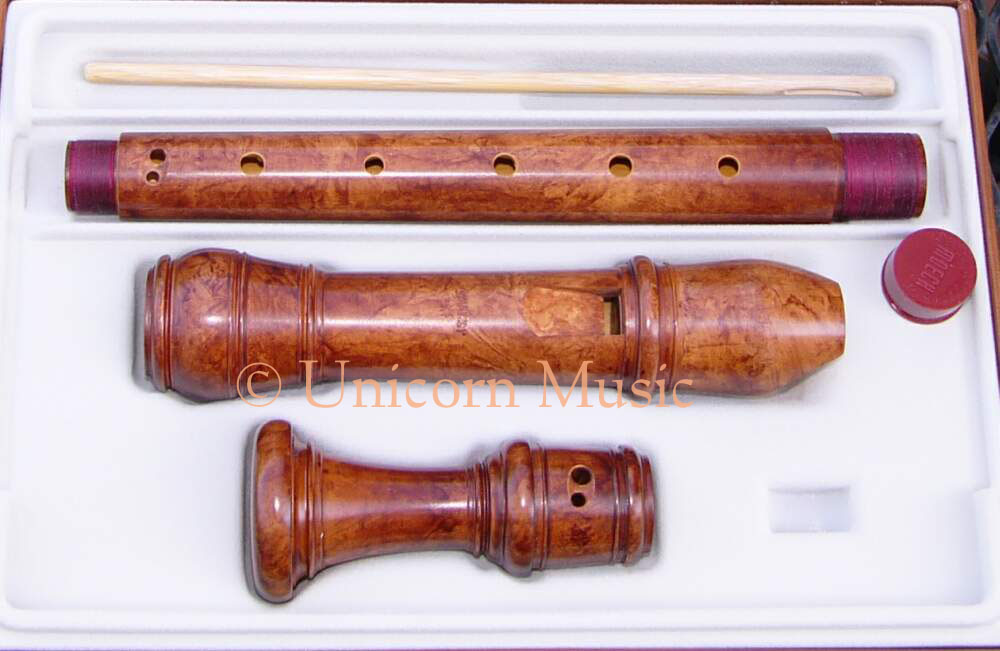
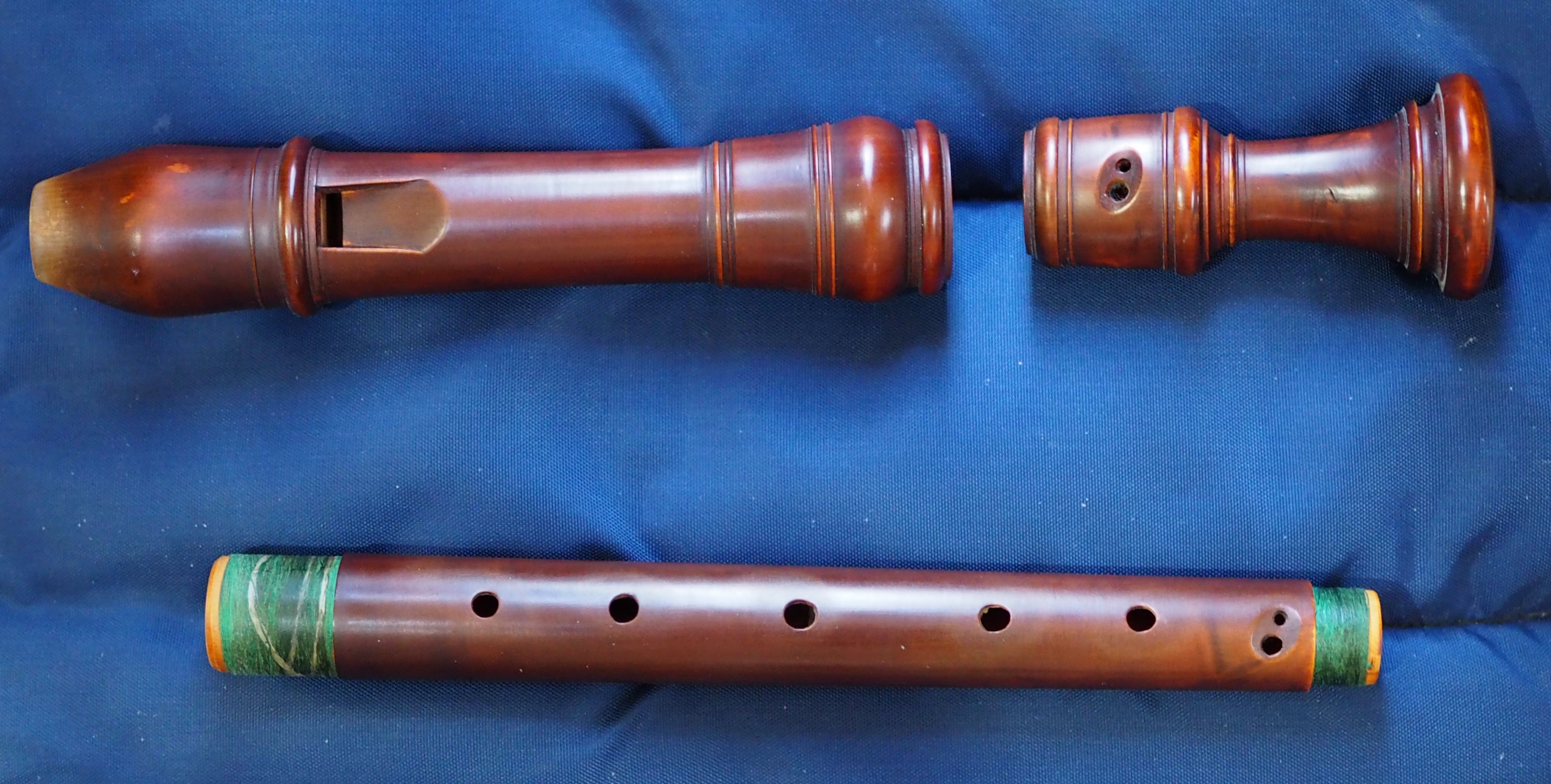
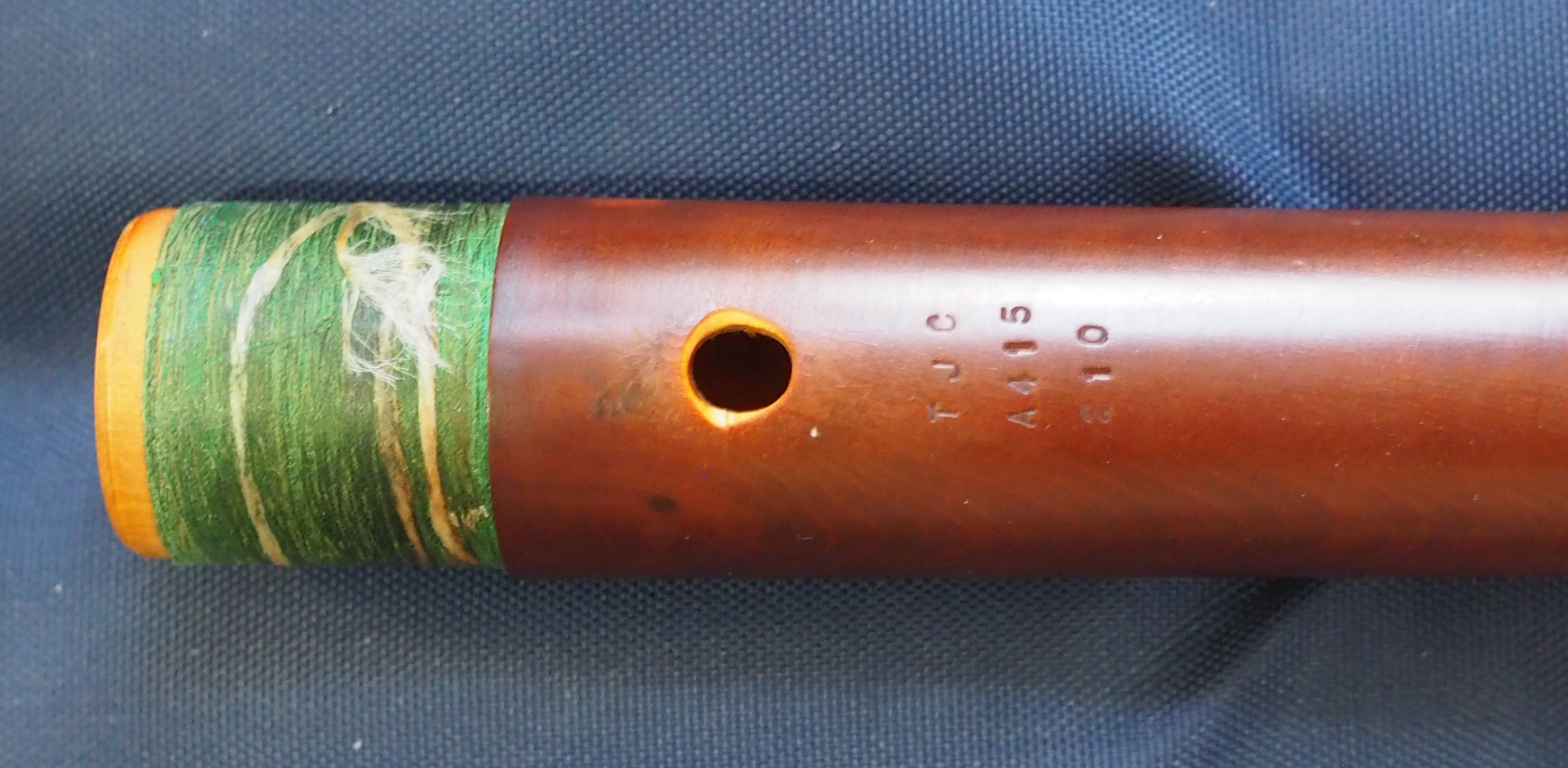
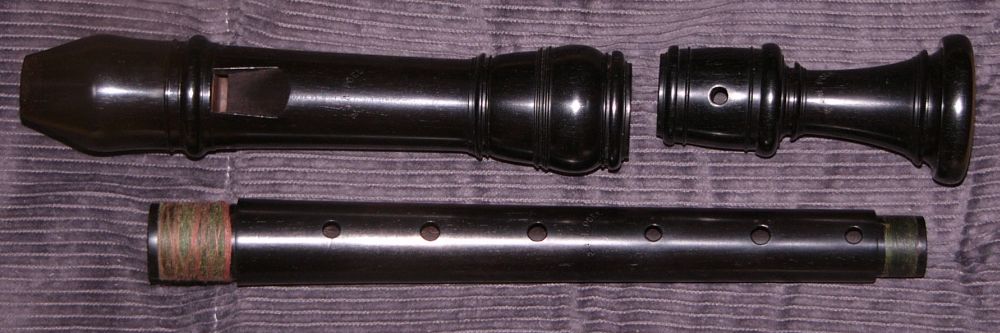
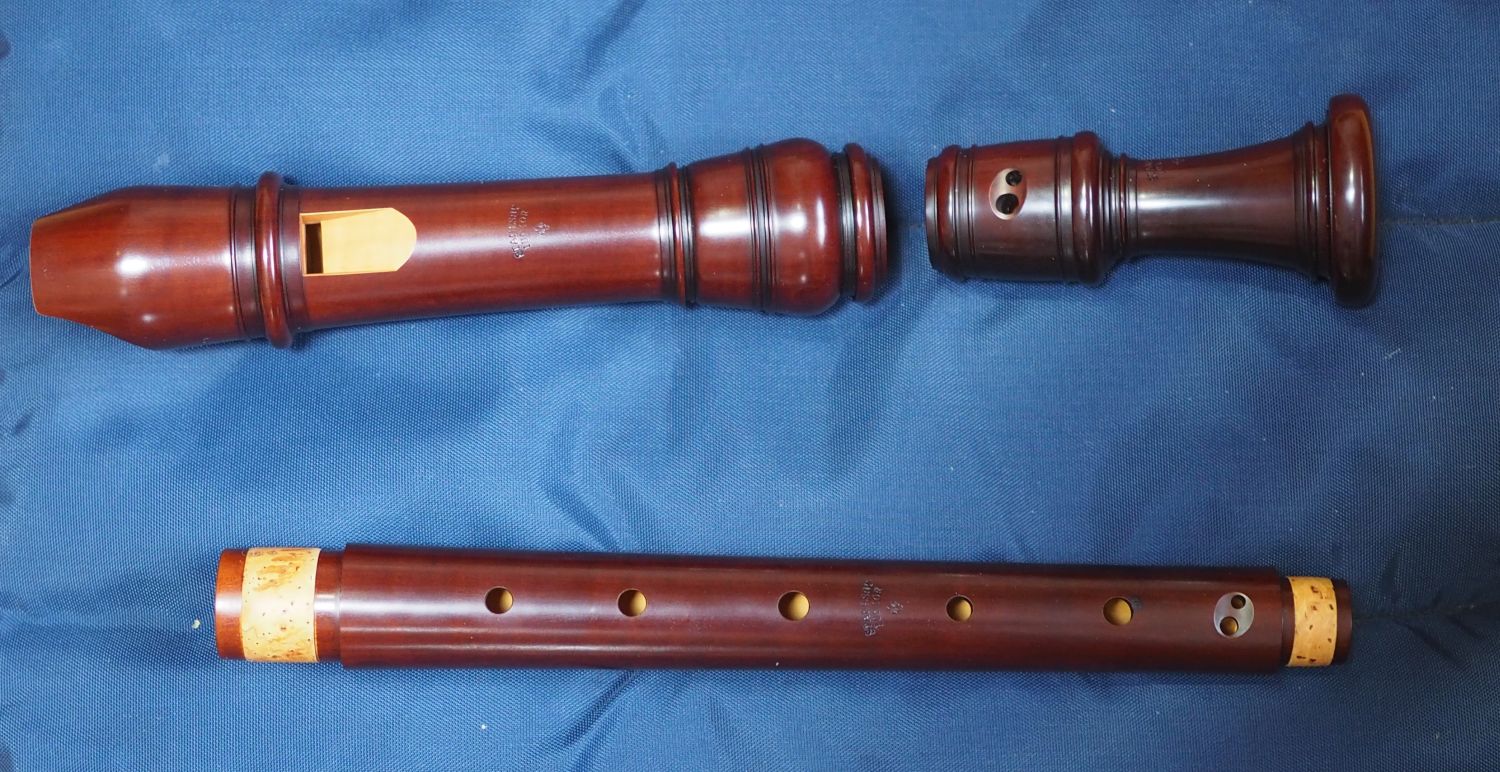
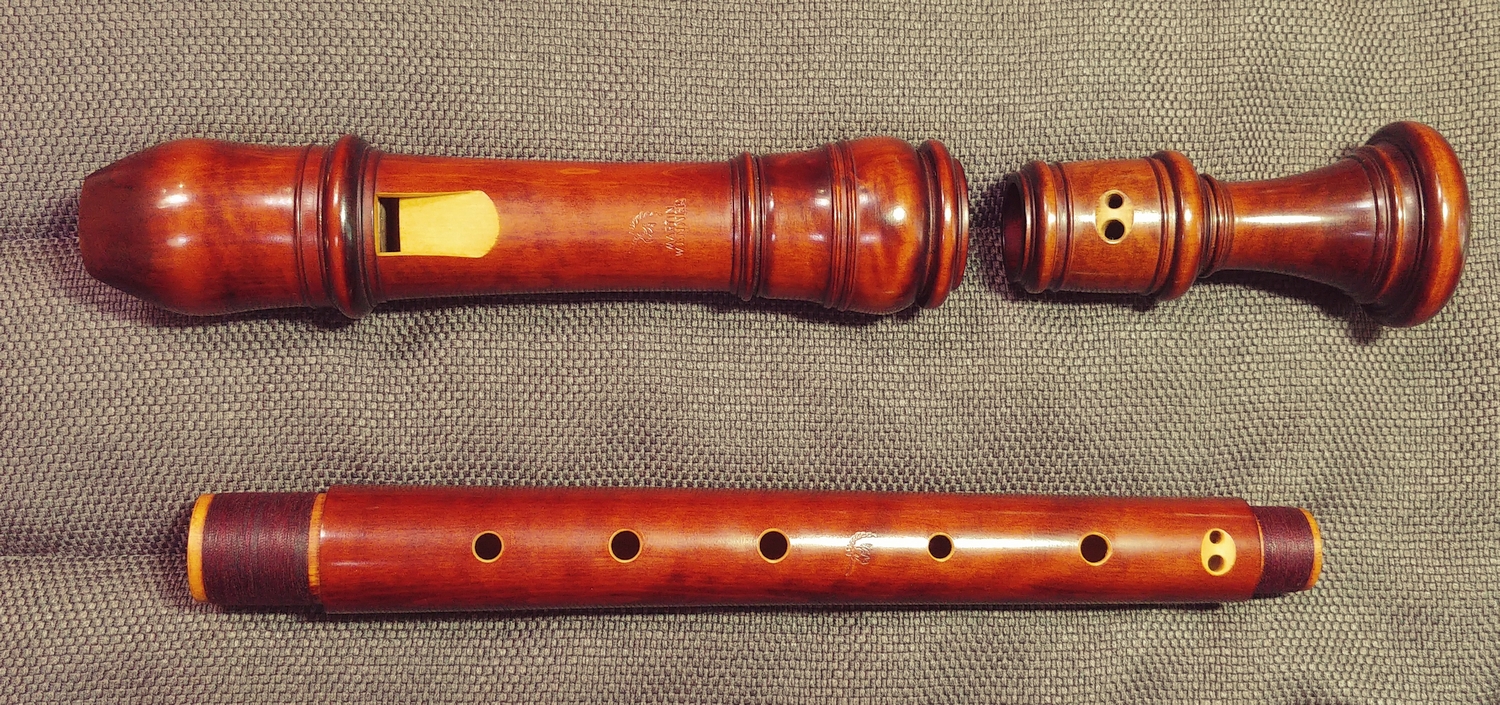
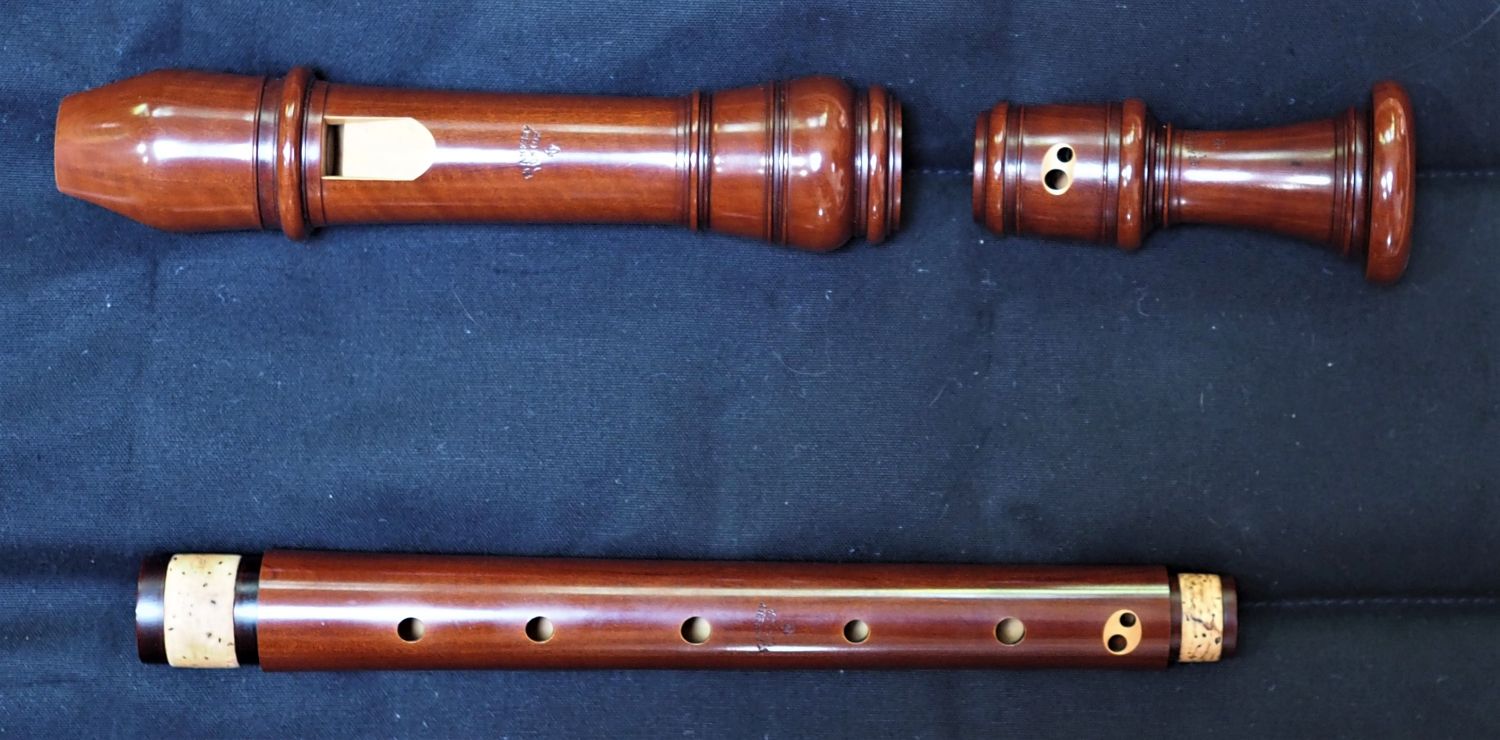
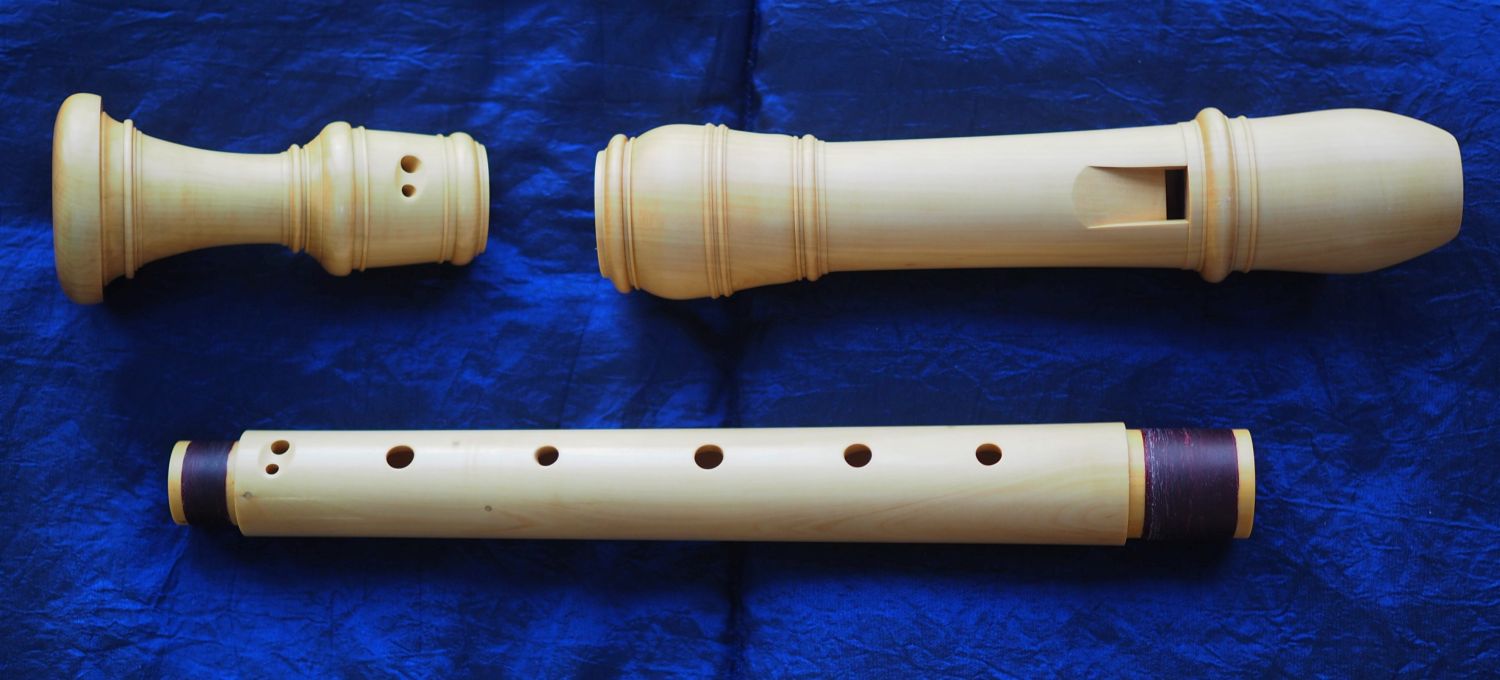
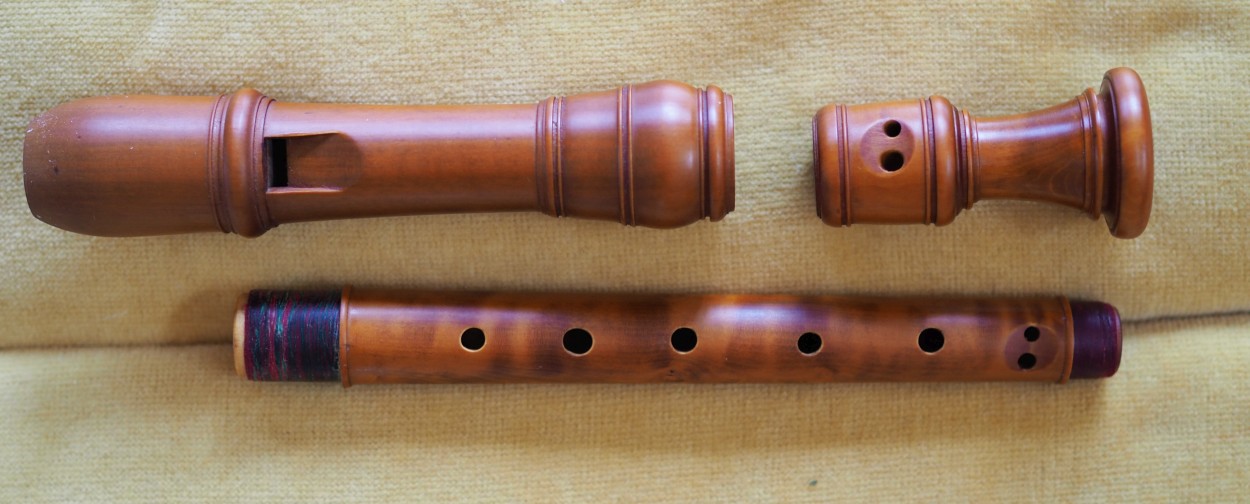
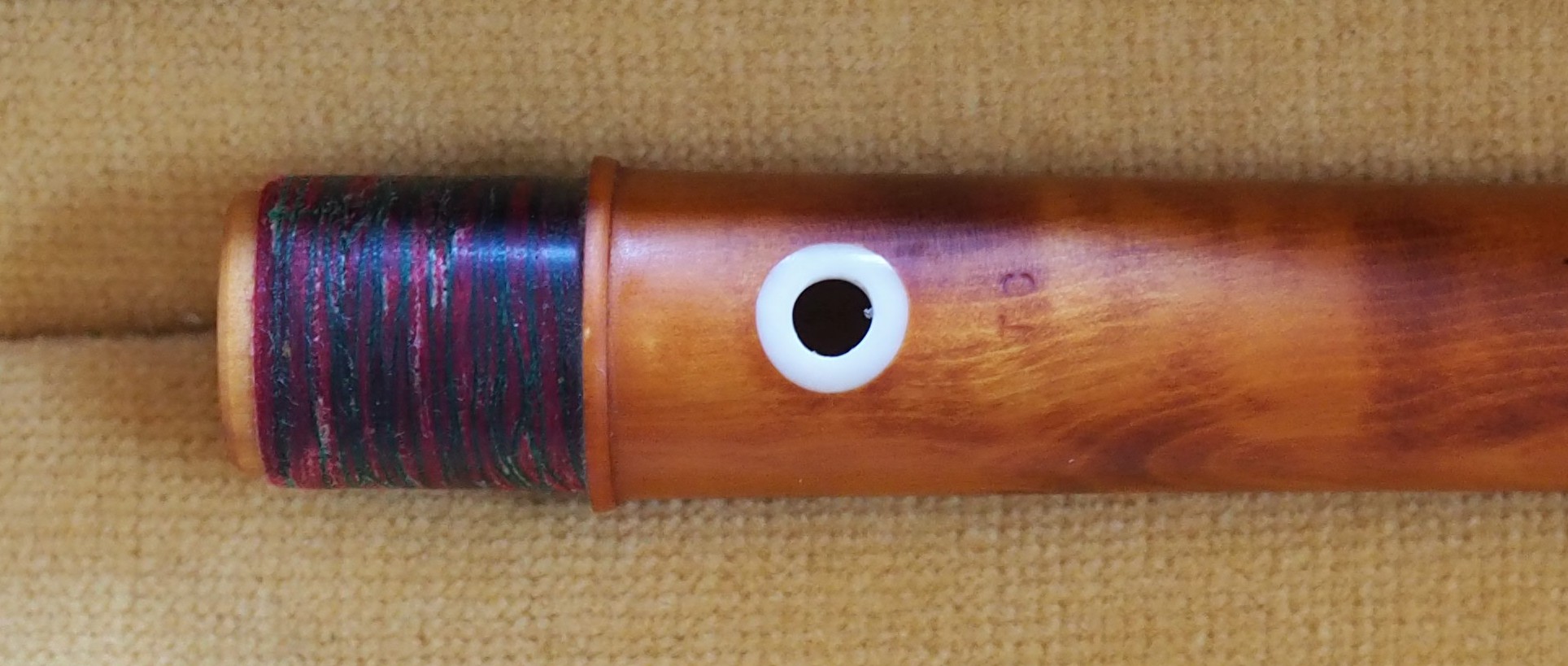
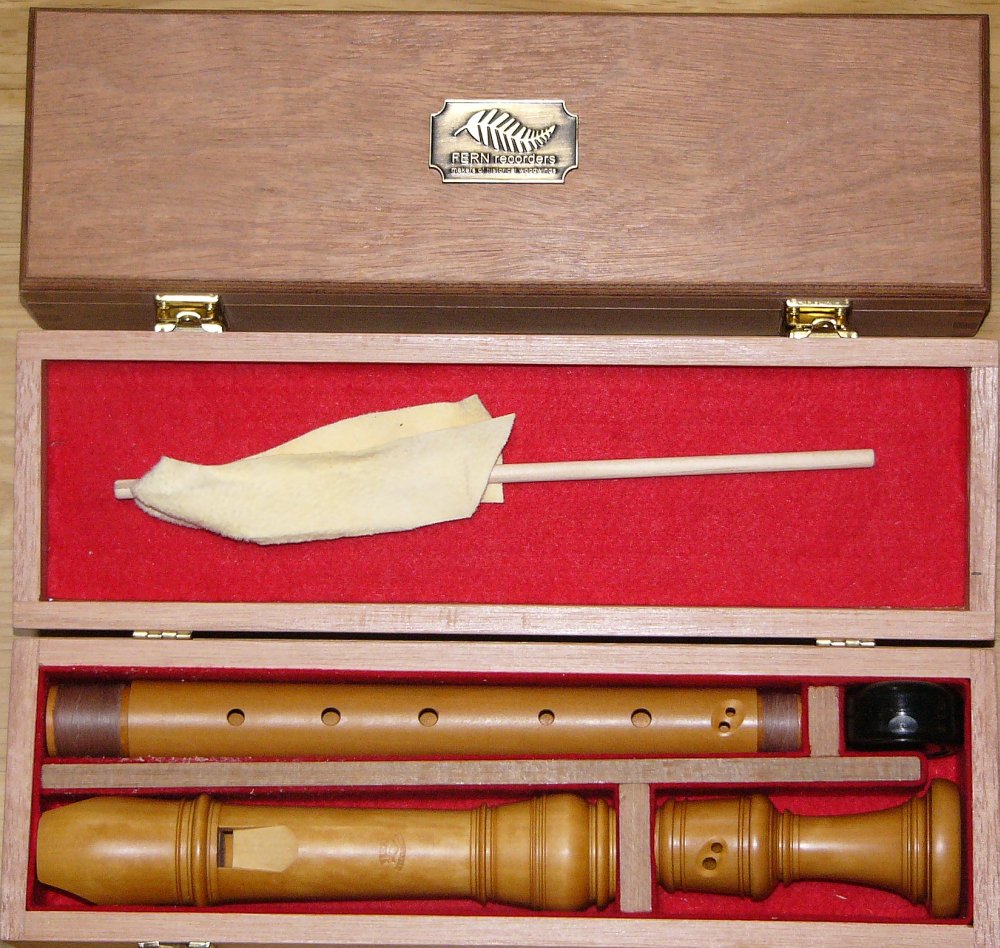
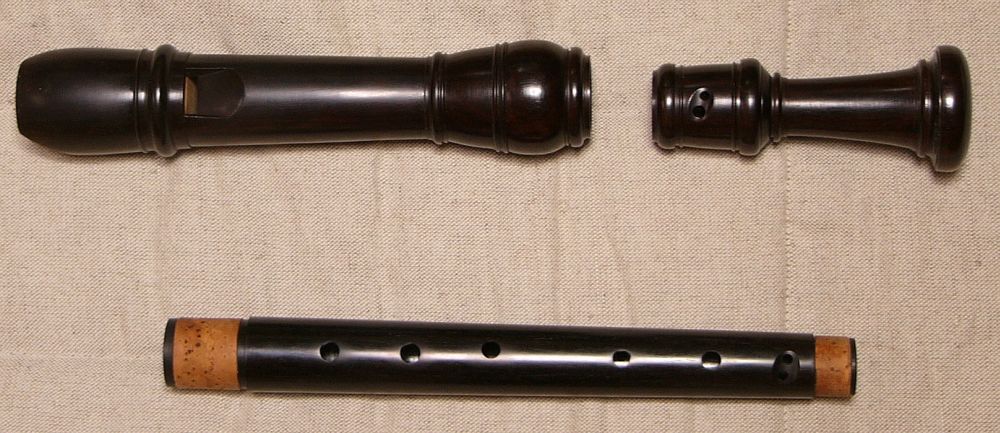
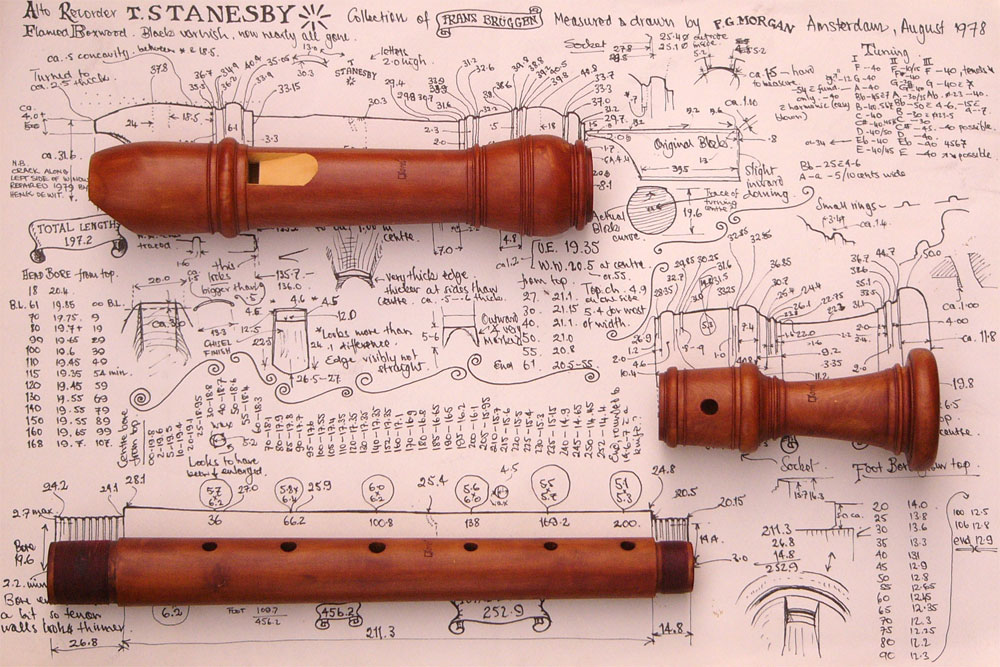
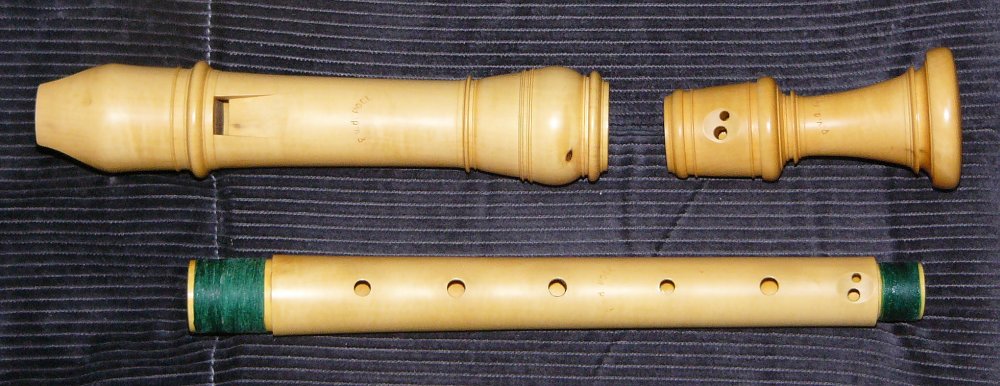
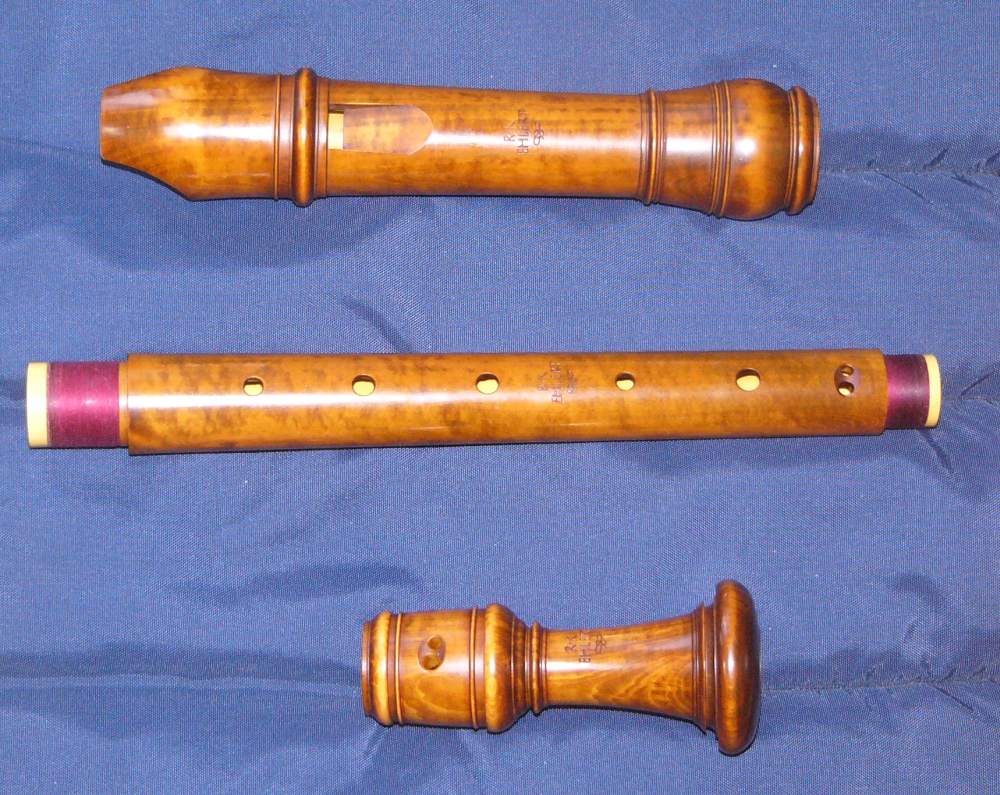
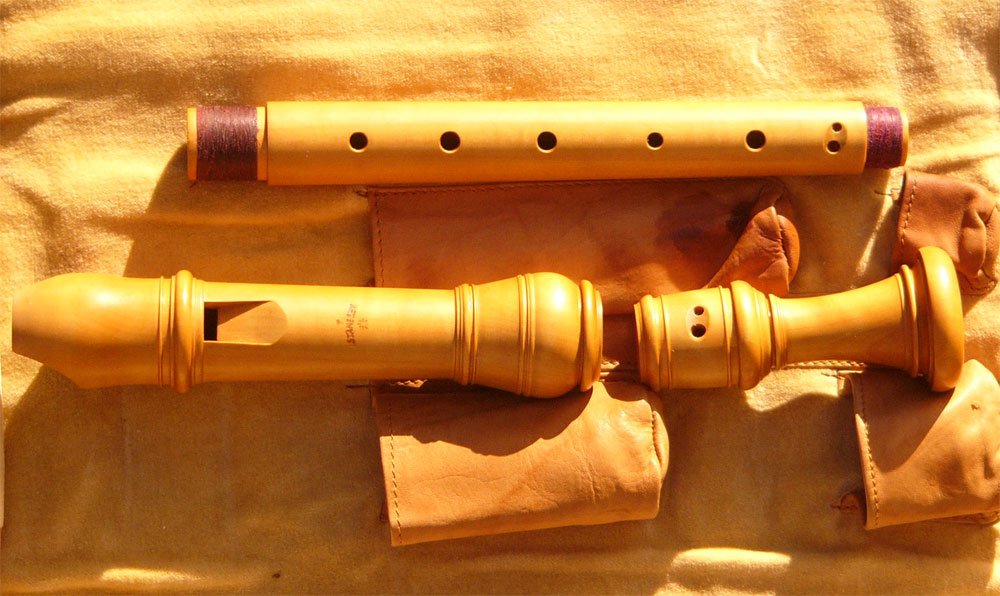
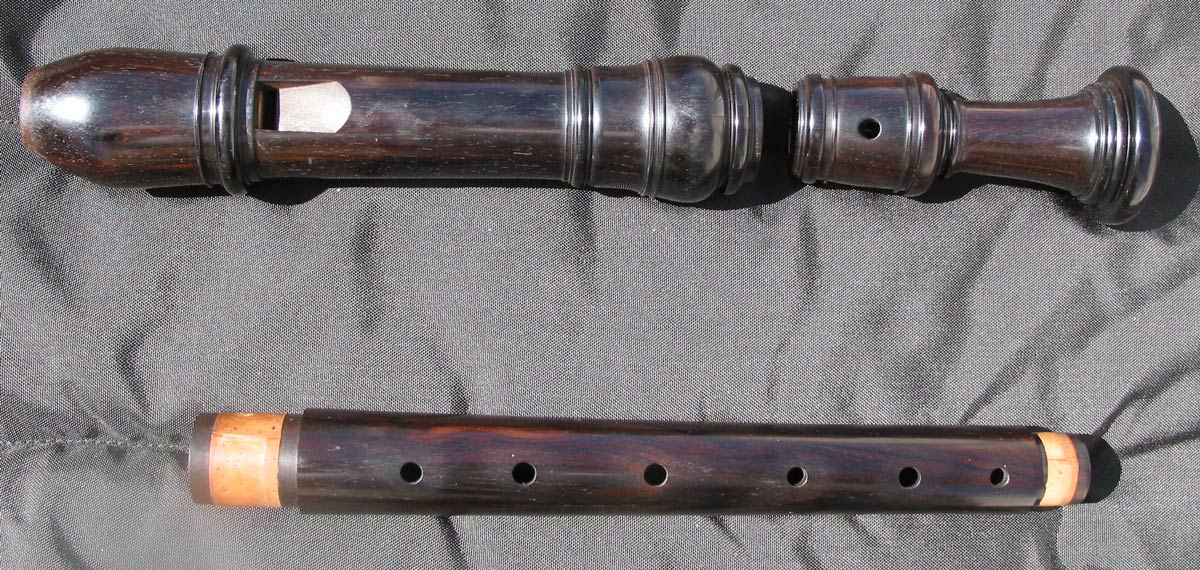
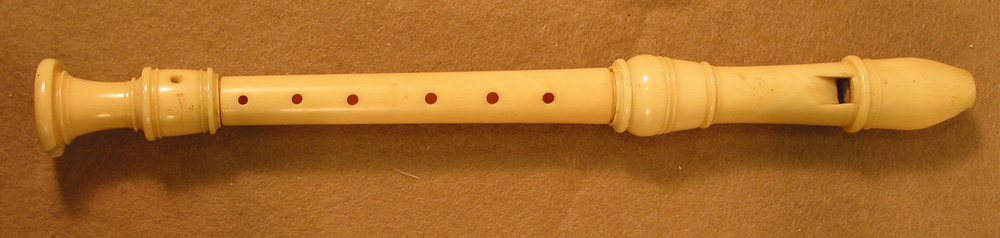
Thomas Stanesby Sr. (c1668 - 1734) and his son, Thomas Stanesby Jr. (1692 - 1754) were English woodwind instrument makers, working in London in the first half of the 18th century. With Bressan, the Stanesbys were responsible for most of the finest surviving English Baroque woodwind instruments. Stanesby Sr was apprenticed to Thomas Garrett in London in 1682 and received the Freedom of the Turners' Company in 1691, whereupon he set up a modest establishment in Stonecutter Street, which led from Shoe Lane to the Fleet Market in the middle precinct of the parish of St Bride's. Stanesby and his son were registered as freemen in 1716. Surviving instruments bearing the father's mark include nine recorders, eight oboes and a bassoon. Currently, Moeck is producing alto models after Stanesby Sr. in both A440 and A415. The original pitch of the instrument in Frans Bruggen's collection is A403. Currently, Ralf Ehlert and Jacqueline Sorel are producing Stanesby Sr. copies at A403 with single holes and Hotteterre fingering (Ehlert makes them also with double holes and English fingering).
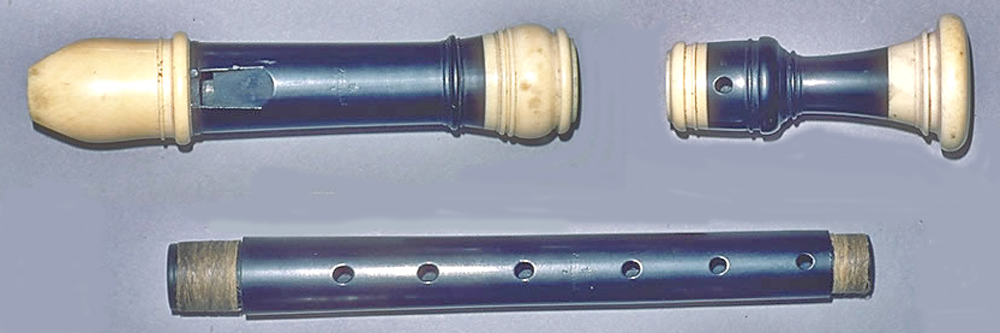
Thomas Stanesby Jr. was apprenticed to his father in 1706 and set up his own establishment over the Temple Exchange in Fleet Street near St Dunstan-in-the-West soon after being released from his indenture in 1713. In 1728 he received the Freedom of the Turner's Company and in 1739 he was elected Master. In 1734 he inherited all his father's tools and a seal ring. He eventually took two apprentices, William Sheridan 1737 and Caleb Gedney in 1741, who finished his apprenticeship in 1750 and inherited the tools of his Master upon his death in 1754. About 1732 Stanesby, sensing the impending eclipse of the recorder in professional music circles, issued A New System of the Flute a Bec or Common English Flute wherein he argued vigorously for the use of the 'C Flute' (tenor recorder in C) and presented a 'full and perfect' fingering chart. The demand for the transverse flute increased, however, and Stanesby made a considerable number of these. Halfpenny wrote that Stanesby signed himself 'junior' only up to 1732. He marked his instruments 'STANESBY IUNIOR' or 'STANESBY LONDON'; the mark 'MURAEUS' is added to the only surviving bassoon, which is dated 1747 (it was possibly repaired by the maker of that name). Other surviving instruments include 38 flutes (of which 25 are ivory), two flutes d'amore, 16 recorders, five oboes and a bassoon.
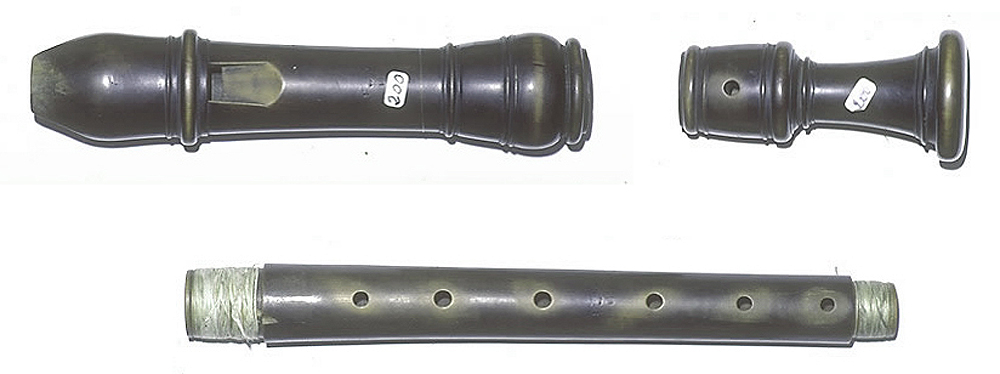
Stanesby's later instruments show a simplification of the older Baroque exterior following the general trend toward the classical woodwind design. Typical examples are a few recorders showing a slender profile with a footpiece similar to those of transverse flutes of the time, omitting the bulbous bottoms of recorders made by himself, his father, and others a generation earlier. But this exterior change is not matched by a change in acoustical properties. Andreas Glatt makes an exact copy of the Stanesby Jr. alto in Paris at A410, with single holes and Hotteterre fingering. Notable copies of the Stanesby Jr. alto at A415 with double holes and English fingering include Morgan, van der Poel, and von Huene.
Handel Sonata in F Major HWV 369: Stanesby Sr. Ehlert Stanesby Sr.
Bruggen Oberlinger
Larghetto: X X
Allegro: X X